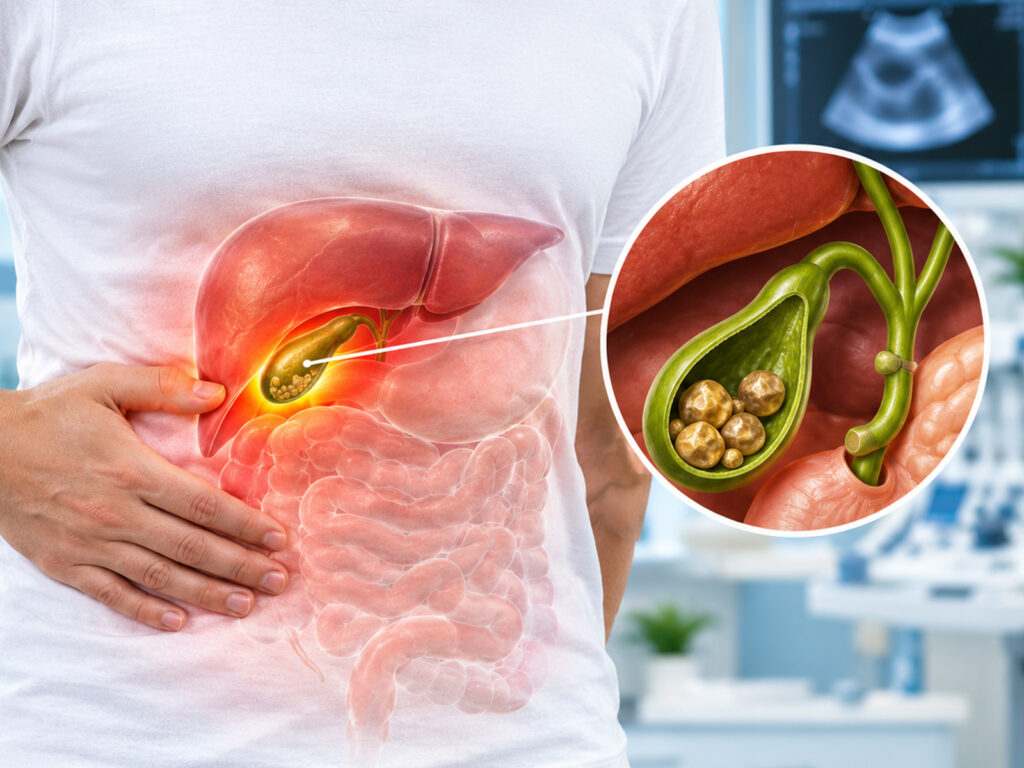
Gallbladder disease is one of the most common surgical conditions seen in general practice, and most cases are effectively managed with laparoscopic (keyhole) surgery.
During consultation, Dr.Manglik reviews the patient’s symptoms, ultrasound findings and overall health to determine whether the gallbladder needs to be removed, and if so, the most appropriate surgical approach — standard laparoscopic cholecystectomy, single-incision laparoscopic surgery, or management of associated bile duct stones.
The goal is to offer a minimally invasive solution suited to each patient, with an emphasis on safety, faster recovery and minimal scarring.
What is Gallbladder Disease?
The gallbladder is a small, pear-shaped organ beneath the liver that stores bile, a fluid that helps digest fats. When the balance of substances in bile changes, hard deposits called gallstones can form inside it. These stones may block the flow of bile, leading to pain, inflammation or infection.
Gallstones are extremely common and often cause no symptoms at all. However, once they start producing pain or complications, surgical removal of the gallbladder is the only definitive treatment — medicines and dietary changes can ease symptoms temporarily but do not dissolve or prevent stones from recurring.
Unlike kidney stones, gallbladder stones cannot be dissolved with medicines, crushed with laser, or flushed out naturally.
Attempting to dissolve or flush gallstones can push them into the main bile duct or pancreas, leading to severe complications:
Acute Cholecystitis : Severe infection and swelling of the gallbladder wall.
Jaundice / Choledocholithiasis : Gallstones slipping into the Common Bile Duct (CBD).
Gallstone Pancreatitis : Dangerous inflammation of the pancreas caused by duct blockage.
Why Choose Dr.Shresth Manglik for Gallbladder Treatment?
Extensive experience in laparoscopic cholecystectomy
Focus on minimally invasive, keyhole-first approach
Experience managing both routine and complicated gallstone disease
Capability to handle emergency gallbladder presentations
Associate Consultant at Sir Ganga Ram Hospital, a leading multi-specialty center
International training in advanced minimally invasive surgical techniques
Strong academic and research background in general surgery
Emphasis on personalized treatment planning for every patient
Frequently Asked Questions?
Q1. Can gallstones be treated without surgery?
No. There are no safe, long-term medicines or diets that can permanently dissolve or remove gallbladder stones. Surgical removal of the gallbladder is the only definitive cure.
Q2. Can I live a normal life without a gallbladder?
Yes, absolutely. The gallbladder only stores bile; it does not make it. After removal, bile flows directly from the liver into the small intestine, allowing you to digest food normally.
Q3. How long does the laparoscopic surgery take?
The procedure typically takes between 30 to 60 minutes under general anesthesia.
Q4. When can I resume my normal diet after surgery?
You will start with liquids and a light diet on the day of surgery. Over 2 to 3 weeks, you can gradually resume your regular family diet.