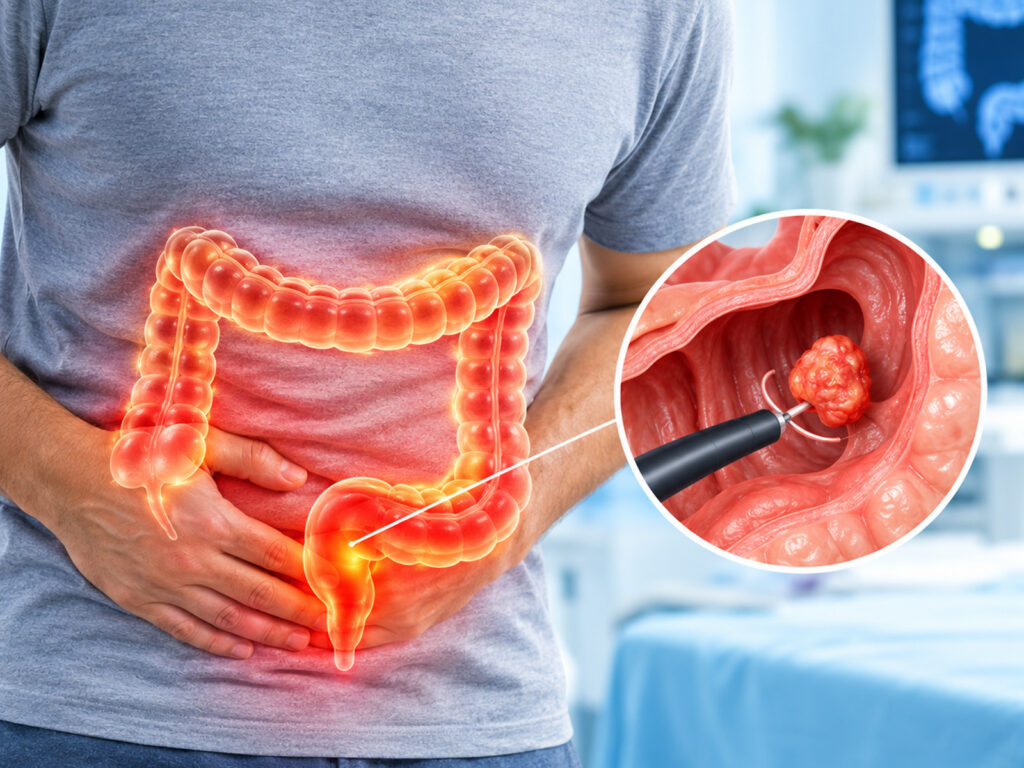
Colorectal conditions range from common anorectal problems like piles and fissures to more complex disorders of the colon and rectum, and treatment is tailored to the specific condition, its severity and the patient’s overall health.
During consultation, Dr.Manglik carries out a detailed clinical assessment — supported by proctoscopy, colonoscopy or imaging where needed — to arrive at an accurate diagnosis and recommend the most appropriate treatment, whether conservative management, laser treatment or surgical intervention.
The focus is on resolving symptoms effectively while preserving normal bowel function and minimizing discomfort during recovery.
What are Colorectal Conditions?
The colon, rectum and anal canal form the final part of the digestive tract, responsible for storing and passing stool. Problems in this region — such as swollen blood vessels (piles), tears in the anal lining (fissures), abnormal tunnels near the anus (fistulas), or structural issues higher up in the colon — can cause pain, bleeding, discharge or changes in bowel habit.
Many colorectal conditions are highly treatable, especially when addressed early. While some mild cases respond to lifestyle changes and medication, persistent or advanced cases typically require a procedure to relieve symptoms and prevent recurrence or complications.
Conditions We Treat
Piles (Hemorrhoids)
Anal Fissure
Fistula-in-Ano
Pilonidal Sinus
Constipation & Bowel Disorders
Rectal Prolapse
Modern Surgical Techniques Offered
Laser Treatment for Piles, Fissure & Fistula: A minimally invasive option offering less pain, minimal bleeding and quicker return to daily activities compared to conventional surgery.
Conventional Surgical Management: Time-tested surgical techniques used for cases better suited to a traditional approach.
Pilonidal Sinus Excision: Complete removal of the sinus tract with wound management planned to reduce recurrence.
Laparoscopic Colorectal Surgery: Minimally invasive approach considered for select structural colorectal conditions.
The appendix is a small, finger-shaped pouch attached to the large intestine. When it becomes blocked — often by stool, swelling or infection — bacteria multiply inside it, causing inflammation known as appendicitis.
If untreated, an inflamed appendix can swell, lose blood supply and eventually rupture, spilling infection into the abdominal cavity and causing a serious condition called peritonitis. Because of this risk, appendicitis is considered a surgical emergency, and the appendix usually needs to be removed once the diagnosis is confirmed.
Why Choose Dr.Shresth Manglik for Colorectal Treatment?
Experience with both laser and conventional colorectal procedures
Focus on minimally invasive treatment wherever suitable
Careful clinical evaluation to match treatment to the specific condition
Experience managing recurrent and complex anorectal conditions
Associate Consultant at Sir Ganga Ram Hospital, a leading multi-specialty center
Training in advanced minimally invasive surgical techniques
Strong academiStrong academic and research background in general surgeryc and research background in general surgery
Emphasis on personalized, evidence-based treatment planning
Frequently Asked Questions?
Q1. Do piles always need surgery?
No. Mild piles often respond well to dietary changes, medication and lifestyle adjustments. Surgery or laser treatment is generally recommended when symptoms are persistent, recurrent or advanced.
Q2. Is laser treatment better than conventional surgery?
Laser treatment typically offers less post-operative pain, minimal bleeding and a faster return to routine activities, making it a preferred option for many patients. However, the right choice depends on the specific condition and is best decided after clinical evaluation.
Q3. How long is the recovery after colorectal procedures?
Recovery varies by procedure. Laser treatments often allow patients to resume light activity within a few days, while more involved surgeries may need a slightly longer recovery period.
Q4. Is colorectal surgery painful?
Modern techniques, especially laser and minimally invasive approaches, are designed to significantly reduce post-procedure pain compared to traditional methods.